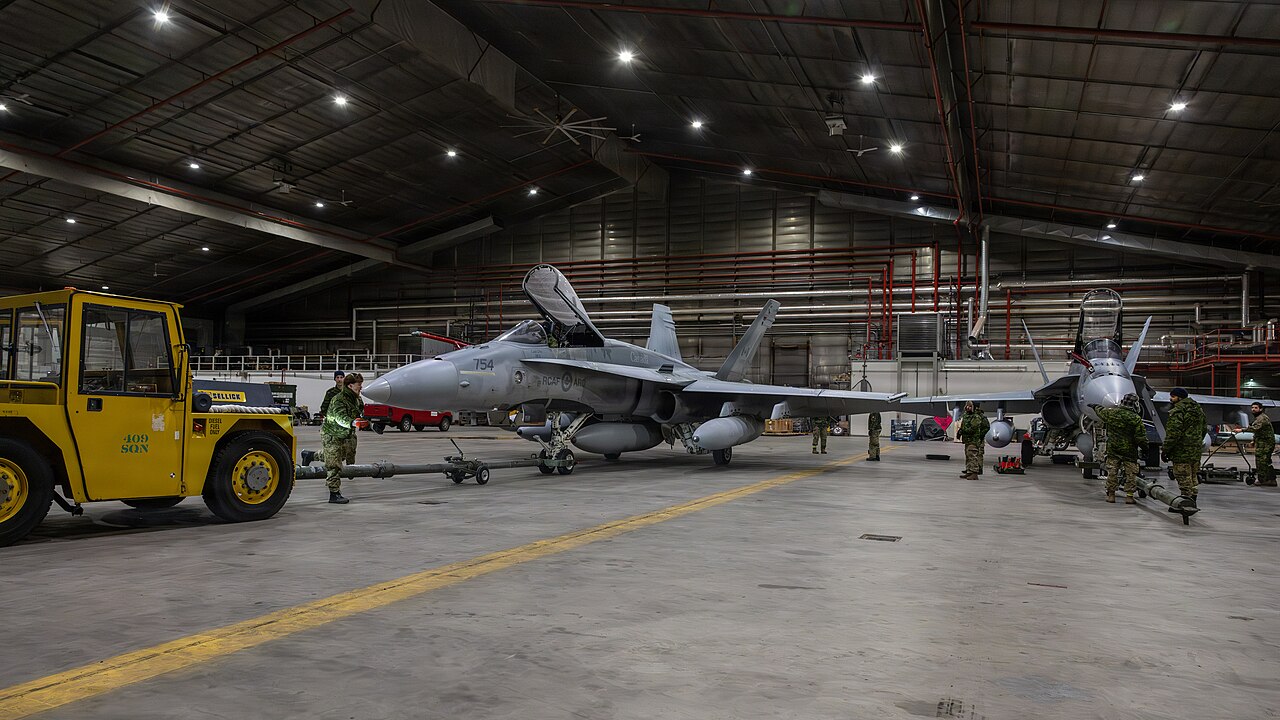
For used-aircraft introduction, establish which configuration and records are available, what prior work covers and where Canadian differences matter. For modernization, assess changed functions and their interfaces. For structural assurance, calendar age is only one part of the story; usage and the assumptions behind the substantiation matter. DND’s Hornet Extension Project describes capability work and fleet-life considerations, but its public procurement summary is not a complete publication of individual certification findings.
Why this case matters
The CF-188 supports two distinct learning questions: introducing used allied aircraft and managing modernization or life extension in service. Do not collapse these into one approval event. A used aircraft brings a design history and an individual service history. An upgrade brings changes to configuration and interfaces. Ageing management brings questions about actual usage, structural condition and remaining assumptions.
Follow the evidence
The CF-188: When Your Usage Is Not the Tested Usage
The CF-188 Hornet makes the same point from the certification side. The design was certified for 6,000 hours under severe US Navy usage; differences between Canadian usage and the tested usage spectrum - compounded by post-test production modifications - drove additional full-scale fatigue testing under the International Follow-On Structural Test Program (IFOSTP), run jointly with the RAAF and including the FT245 wing and centre-fuselage test article at the NRC's Institute for Aerospace Research with Bombardier support, feeding the structural certification of the wing. (The IFOSTP account rests on a secondary academic paper - programme-history colour; the regulatory architecture above rests on the TAM.) The modern chapter is the Hornet Extension Project (HEP), keeping the fleet viable to 2032: Phase 1 upgrades avionics and mission-support systems on up to 88 CF-188s "to ensure compliance with regulatory requirements and interoperability standards," and Phase 2 delivers combat-capability upgrades for 36 aircraft (DND Departmental Plan 2025-26). Note the HEP wording: even a combat-capability project is, in its first phase, a *continuing-airworthiness* project - regulatory compliance is what keeps the fleet flying at all.
HEP also illustrates the annex suite operating together. Avionics and mission-support modernization touches EWIS (Annex D) - new wiring, new loads, an updated Electrical Loads Analysis; it touches the mechanical-systems program wherever mission equipment drives cooling and power demands (Annex B); and it arrives on an airframe whose structural life is managed under the IFOSTP-derived baseline (Annex A). A major modernization of an aging fleet is never one program's problem: it is all five annexes re-baselined at once, with the maintenance program, the configuration record, and ARB reporting catching up behind it. That integration burden is why aging-aircraft modernization is a continuing-airworthiness program with a project budget attached - not the reverse.
And the annexes have an endgame. When extension is no longer economically or technically defensible, the same usage data feeds the disposal decision under TAM Part 4 - including the TAA's approval role for disposal of technical records - and the fleet-replacement business case. The CP-140's P-8A successor and the CF-188's 2032 horizon were both set, in part, by integrity-program arithmetic. Continuing airworthiness does not end at disposal; it writes the justification for it.
Twelve-minute project workshop
Training scenario — not an actual project decision
Training scenario: two fictional allied aircraft have the same model designation but different modification histories and usage records. Both will receive a Canadian mission-system update. A briefing proposes using one aircraft’s evidence for the other and treating the capability upgrade as a renewal of structural life. Your review should distinguish design equivalence, configuration differences, individual records and structural substantiation.
- Spend three minutes separating acquisition, modernization and ageing questions.
- Spend four minutes drafting a configuration and records comparison for the two aircraft.
- Spend three minutes identifying evidence needed before crediting the upgrade or assigning structural assumptions.
- Spend two minutes preparing a bounded recommendation with unresolved records visible.
Compare your reasoning
The model designation does not prove configuration identity. Capability work does not by itself renew a structural-life argument. Compare modifications, usage, inspection and substantiation while retaining applicable prior evidence. The exercise is fictional; the source-backed fleet context comes from DND project material and the course’s referenced historical examples.
Keep your worksheet as an optional learning aid. It is not submitted or graded. The practice below has no pass mark and does not affect core course completion.
Sources and further reference
- Technical Airworthiness Manual
TAM — current manual and structure
- Airworthiness Design Standards Manual
ADSM — recognized standards and certification approaches
- Hornet Extension Project
DND — CF-188 capability and life-extension work
Continuing airworthiness keeps the argument current
The evidence story continues after entry into service. Feed new information back into the assessment rather than treating the original certificate as the final answer.
Observe service
Usage, defects and findings
Capture what the fleet is actually experiencing, including usage that may differ from original assumptions.
Assess significance
Safety, configuration and assumptions
Determine which design, maintenance or operating assumptions may be affected and what assessment is needed.
Control the response
Applicable change or corrective process
Follow the applicable process for a change, instruction or other corrective action. Keep the evidence tied to its defined configuration.
Align the records
Configuration and support information
Ensure the aircraft, records and applicable instructions describe a consistent state.
Monitor again
Verify and learn from the outcome
Observe the result and continue monitoring. This feedback loop is a learning model; actual release requirements come from the applicable rules.
CF-188 Hornet
An in-service fleet combines aircraft configuration, support and accumulated usage. Design changes and structural-life questions need their own evidence.