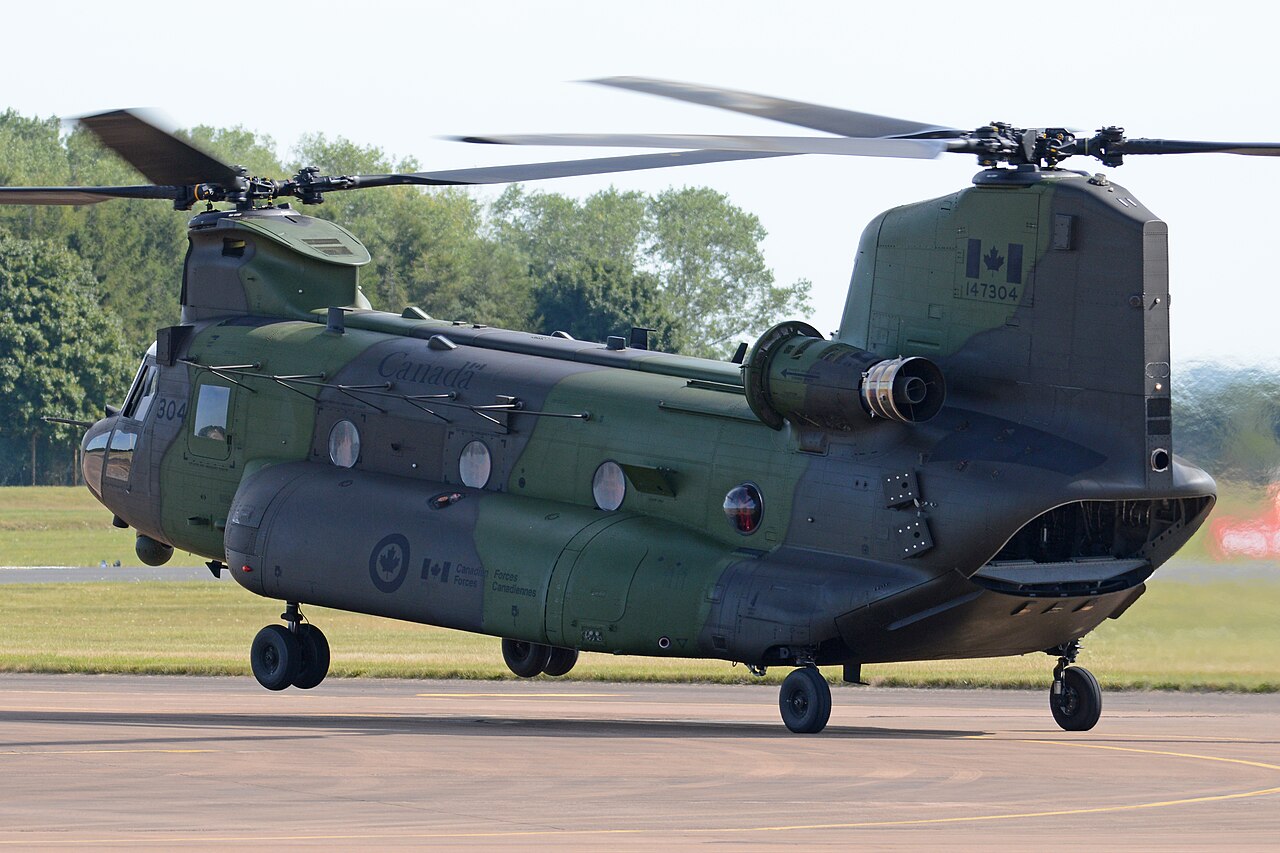
Separate the proven basic vehicle from DND-unique features. Prior military design work may be valuable without treating every original specification as an airworthiness code. Acceptability concerns confidence in the source work; applicability concerns its relevance to Canada. The TDE review then addresses the assurance needed for the design under consideration. A service-entry milestone, a provisional clearance and an individual aircraft’s flight authority answer different questions. They must be described with their actual conditions, not as evidence that the programme skipped certification.
Why this case matters
The CH-147F is a useful documented example of why an established military aircraft need not arrive with a familiar civil airworthiness-code pedigree. The ADSM discusses the Chinook and the TDE approach. Read that account for the design and evidence rationale rather than using the fleet name as a shortcut. The Canadian project still needs consideration of its particular configuration and changes.
Follow the evidence
Aircraft With No Recognized-Code Pedigree
What happens when the design predates the code system entirely? Legacy fleets such as the CF-188 Hornet - delivered 1982-1988, before the modern program existed - were produced to, or qualified against, a weapon system specification with no clearly identifiable certification basis. ADSM 1.3.12(2) supplies the answer: "the start point for developing a certification basis will be the airworthiness and design standards that are embedded within the weapon system specification," supplemented from recognized codes as needed. Once a basis exists, it disciplines the fleet for life: under ADSM 1.3.13, in-service modifications must at minimum satisfy the existing certification basis, and the TAA may require newer standards where warranted. This is why two aircraft of the same nominal type can carry very different compliance obligations depending on when and how each basis was built - and why the Type Record and its Technical Airworthiness Data are living documents.
STANAGs deserve a footnote of their own, because students routinely overstate them. There is no standalone "STANAG airworthiness code" in the TAM scheme. NATO standardization agreements enter Canadian practice mostly as cross-referenced design standards inside EMACC and as interoperability requirements - for example, the IFF Mode 5/STANAG 4193 provisions appearing in TAA Advisory 2021-01. Strand (d) of the ADSM menu - ratified international agreements - is the hook, but the operative airworthiness content still arrives through recognized codes and the TAA-approved Certification Basis.
Behind the menu sits a safety philosophy worth naming: the Acceptable Level of Safety (ALOS) concept, which the TAM uses in standards selection. The Certification Basis is not a hunt for the strictest available text; it is the construction of a basis that achieves the program's safety objective for a defined configuration, role and environment. That framing explains two behaviours you will observe in TAA practice: the willingness to accept a less prescriptive military criterion where the military context justifies it, and the insistence on Special Conditions where the chosen code is silent on a novel feature. Both are the same judgment - adequacy against ALOS, documented - applied in opposite directions.
Twelve-minute project workshop
Training scenario — not an actual project decision
Training scenario: a fictional follow-on Chinook installation alters indications and adds mission equipment. The team has the earlier baseline evidence and proposes citing the original acquisition as sufficient proof. One interface changes the crew workload; another changes electrical demand. You must explain what remains useful from the established design and what the modification assessment needs to revisit. This is an invented follow-on, not a claim about a real CH-147F change.
- Spend three minutes distinguishing baseline evidence from the new installation.
- Spend four minutes making an acceptability and applicability ledger for three imagined reports.
- Spend three minutes linking the changed interfaces to requirements and proposed substantiation.
- Spend two minutes writing a conclusion that distinguishes design approval, clearance and aircraft flight authority.
Compare your reasoning
The prior design argument is a starting point. It should not disappear simply because a change is proposed, and it should not be treated as unlimited approval for new features. Identify unchanged evidence, affected assumptions and new substantiation. The ADSM’s CH-147F discussion supports the documented acquisition lesson; the follow-on exercise is hypothetical. Avoid inferring the detailed finding or conditions of a real approval from the exercise.
Keep your worksheet as an optional learning aid. It is not submitted or graded. The practice below has no pass mark and does not affect core course completion.
Sources and further reference
- Technical Airworthiness Manual
TAM — current manual and structure
- Airworthiness Design Standards Manual
ADSM — recognized standards and certification approaches
A TDE asks two different questions
Acceptability + applicability support bounded credit. A TDE establishes credit; it does not itself grant a Canadian airworthiness approval.
Acceptability
Can we rely on the prior work?
Consider the original standards, processes and procedures. Recognition of an authority can support confidence in that work.
Applicability
Does it fit our aircraft and use?
Compare the Canadian configuration, role and environment with the scope and assumptions of the prior evidence.
Bounded credit
What is credited, excluded or still needed?
Record the credit and its limits. Additional work can remain where Canadian differences or evidence gaps are identified.
Canadian approval
Which approval process uses that credit?
Use the credit in the applicable Canadian type-design or design-change approval process. Do not treat credit as the approval itself.
CH-147F Chinook
Connect the established military design to the TDE example: prior work can be valuable while Canadian differences still need assessment.